

Today’s devotion builds on yesterday.
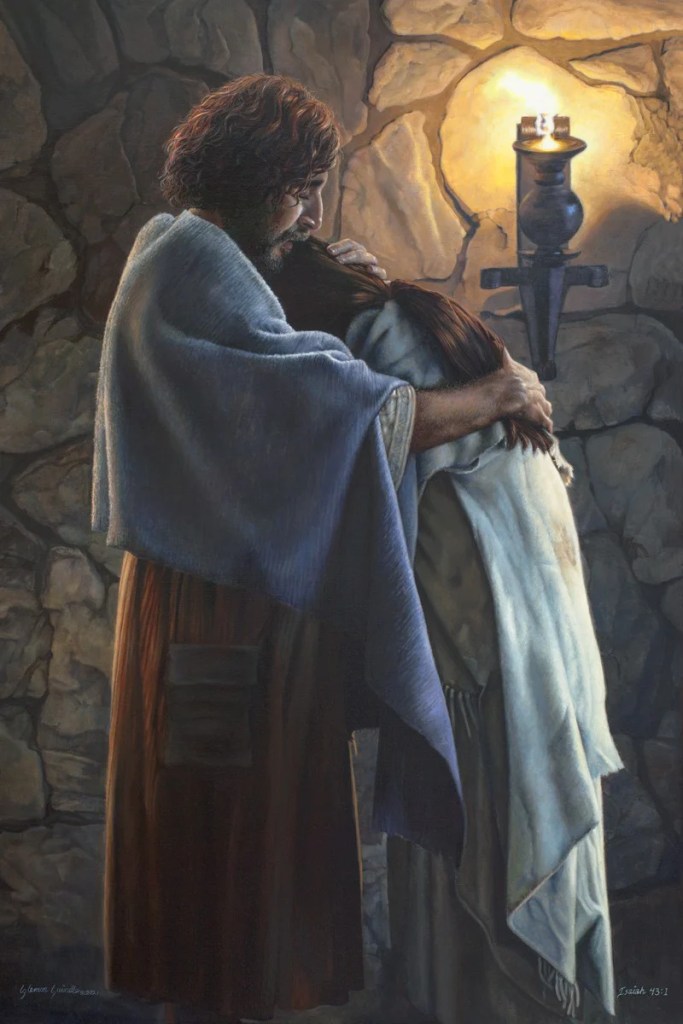
Isaiah 54:10 (NASB95): “For the mountains may be removed and the hills may shake, But My lovingkindness will not be removed from you, And My covenant of peace will not be shaken, Says the Lord who has compassion on you.”
Psalm 103:13 (NASB95): “Just as a father has compassion on his children, So the Lord has compassion on those who fear Him.”
Matthew 18:3 (NASB95): “and said, ‘Truly I say to you, unless you are converted and become like children, you will not enter the kingdom of heaven.’”
Day 2: The Power of “Raichem” (The Father’s Bond)
In human psychology and modern culture, we often view dependency as a weakness or a developmental stage to be outgrown. We celebrate self-sufficiency. Yet, relational psychology and attachment theory reveal that a secure, dependent emotional bond with a caregiver is exactly what gives a child the foundation to survive and thrive.
When the prophet Isaiah spoke of God’s unfailing love, he stated that the Lord has “compassion” on us. The word compassion in this verse comes from the Hebrew word raichem, which means to soothe, cherish, to love deeply like parents, and to be tender. This verb usually refers to a strong love that is rooted in a natural bond, often from a superior one to an inferior.
Think of the way small babies instinctively evoke this feeling in their parents. Babies need us, and their absolute dependence on us is one of the profound reasons we love them so much. This is truly the way the Lord wants us to be toward Him. He wants us to be so needy and so dependent that He is truly our lifeline.
“…recognize and admit that you are emotionally attached to and dependent… in much the same way that a child is on a parent for nurturing, soothing, and protection. Adult attachments may be more reciprocal and less centered on physical contact, but the nature of the emotional bond is the same.” — Dr. Sue Johnson
Earthly parents raise their children to eventually be independent of them and leave home. Our Heavenly Father, however, is not rearing us to be independent. He is rearing us to come home. That strong bond that infants evoke in their parents never changes with God the Father. To be spiritually mature is not to outgrow our need for the Father, but to fully embrace our profound, childlike dependence on His unfailing love.
Reflection Questions
- In what areas of your life are you treating independence and self-sufficiency as a spiritual goal, rather than leaning into your need for the Father?
- How does understanding the Hebrew word raichem (a soothing, deep parental love) change the way you view God’s compassion toward you in your moments of weakness?
Father,
Thank You for the depth of Your raichem—a love that is tender, soothing, and entirely unshakeable. Forgive us for the times we have prioritized our own self-sufficiency, treating our independence as a badge of honor rather than a barrier to Your presence. Help us to embrace the vulnerability of being Your children, recognizing that our greatest strength is found in our absolute dependence on You. Help me to remember that You are not raising me to leave home, but drawing me to come back to You. We thank You that even when the hills shake, Your covenant of peace remains firm. Draw us home to Your heart today and teach us to rest in the secure bond You have established through Your Son.
In Jesus’ name, Amen.
 Digital Footprint Disciples
Leave a comment