

Today’s devotion builds on yesterday.
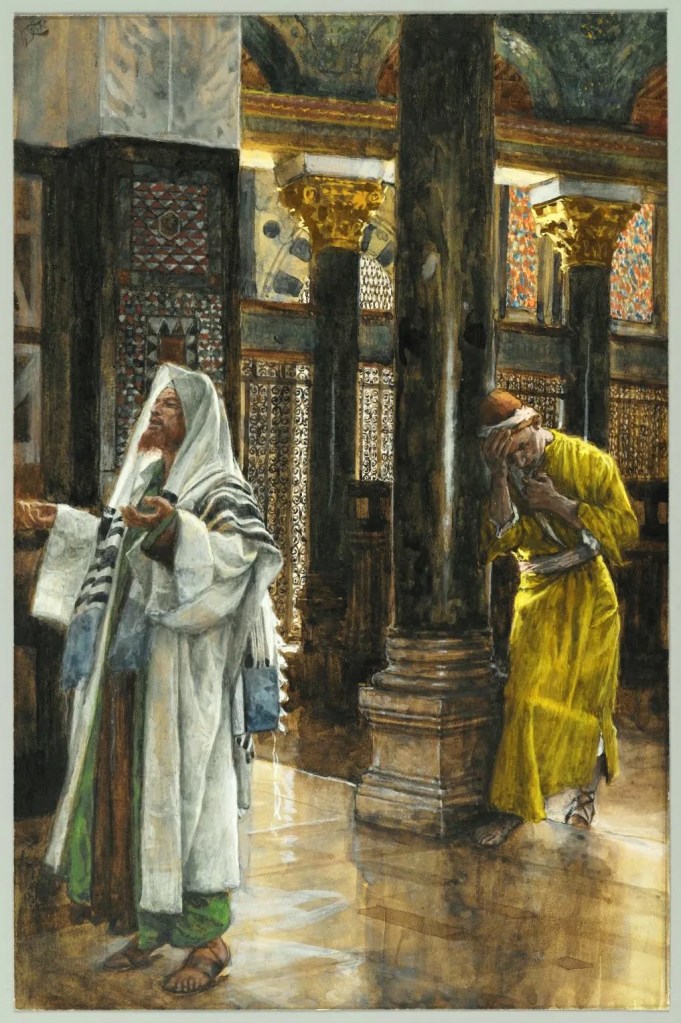
And the tax collector, standing afar off, would not so much as raise his eyes to heaven, but beat his breast, saying, ‘God, be merciful to me, a sinner!’” Luke 18:13
Day 3: Acknowledging Spiritual Insolvency
The Asset Trap We do not wake up in the morning and consciously decide to be self-righteous. Yet, without us even realizing it, a subtle arrogance can creep into our lives, causing us to trust in our own righteousness. We start keeping a mental ledger of our good deeds, our discipline, and our moral victories, slowly convincing ourselves that we have earned our standing before God. When we operate in this self-righteousness, we are relying entirely on our own strength.
The Isomorphism: Spiritual Insolvency vs. Fabricated Assets In the financial world, insolvency occurs when an entity’s liabilities far exceed its assets, leaving it completely unable to pay its debts. In Jesus’ parable, the Pharisee approached the temple presenting a highly favorable—yet completely fabricated—balance sheet. He boasted of fasting twice a week and giving tithes, essentially listing his spiritual assets while looking down on the liabilities of others.
The tax collector, however, recognized his absolute spiritual insolvency. Standing afar off, he knew he had zero assets to leverage, beating his breast and simply pleading for mercy to cover his massive deficit. True justification does not come from proving our net worth to God; it comes from declaring complete bankruptcy and relying entirely on the merciful “bailout” of Christ’s redemption.
“But he gives us more grace. That is why Scripture says: ‘God opposes the proud but shows favor to the humble.’” James 4:6
The Audit Trail of the Heart
- The Posture: True humility means recognizing we have absolutely nothing of ourselves to offer, just like the tax collector who was so broken in the fear of the Lord that he could not even lift his head.
- The Practice: It is easy to understand humility in theory, but entirely different when the “rubber meets the road” in the actual practice of our daily lives.
- The Result: We must have the faith and revelation to understand that when we come to the altar completely broken, we actually walk away justified and redeemed.
“Humility is the only soil in which the graces root; the lack of humility is the sufficient explanation of every defect and failure.” ~ Andrew Murray
Reflection & Application
- Review Your Ledger: Do your prayers sound more like a presentation of your personal discipline and good deeds, or a humble plea for God’s mercy?
- Theory vs. Practice: In what current situation in your life is the Lord asking you to move humility from a “theory” into actual “practice”?
- Accepting the Bailout: Do you truly believe that you are completely redeemed and justified when you leave the altar, or are you still trying to pay off a debt Christ already canceled?
Lord, our Righteous Judge and Redeemer,
We come before You today and lay down our fabricated balance sheets. We confess that we often try to present ourselves as wealthy in good deeds, relying on our own strength and secretly trusting in ourselves that we are righteous. We repent for the times we have exalted ourselves and despised others.
We declare our complete spiritual insolvency before You.
- We recognize that our personal ledgers are bankrupt and that we have nothing of ourselves to offer.
- Break us of any arrogance or self-righteousness that has crept into our hearts without us knowing it.
- Help us to be men and women who willingly lay down before You in secret, asking for Your mercy.
Grant us the faith to accept Your justification.
- When the rubber meets the road today, give us the grace to practice true humility rather than just agreeing with it in theory.
- Let us leave Your presence today with the full assurance and revelation that we are justified by Your grace, not our works.
We ask that You alone be exalted in our weakness.
Amen.
 Digital Footprint Disciples
Leave a comment